
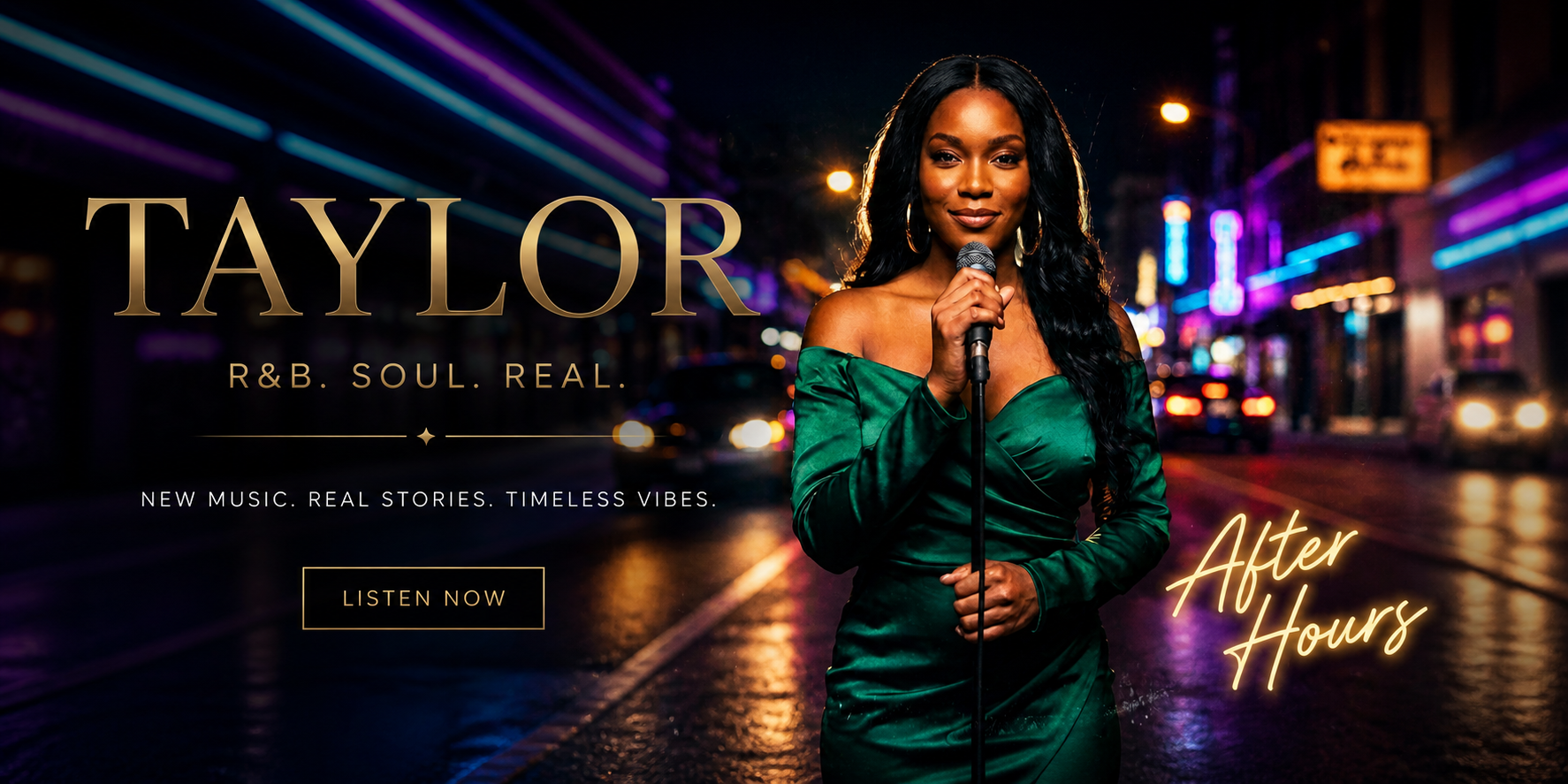
Welcome to my world. If you’re reading this, you probably already know me as Taylor Noire, the voice coming through your speakers, singing about the beautiful, messy, resilient realities of love and life. But what you hear on a final track is just the tip of the iceberg. It’s the final exhale of a process that starts long before I ever step up to the microphone.
Today, I want to pull back the curtain. I want to take you inside my creative sanctuary here in Las Vegas, where the dry desert heat outside contrasts completely with the lush, moody, amber-lit vibe of my studio. Music isn’t just something I sing; it’s something I build from the ground up. Existing at the intersection of vocal artistry and meticulous production is where I find my true rhythm. This is the alchemy of storytelling through sound.
Everything starts with a feeling. For me, that feeling almost always roots itself in the golden era of sound. I am endlessly inspired by the sonic landscape of the 90s—the marriage of hard-hitting, boom-bap hip-hop beats with the velvety, soulful melodies of classic R&B. There is a specific kind of magic that happens when a gritty, heavy drum groove sits perfectly underneath a lush, elegant vocal arrangement.
To me, a song hasn’t truly arrived until the groove makes your head nod and the melody makes your heart ache.
When I’m brainstorming concepts or sketching rough ideas, I’m listening critically to how those classic tracks were structured. I want that heavy backbeat, but I want it to breathe. The language of rhythm and texture is my foundation. I look for grooves that make listeners move, and I chase instrumental textures that add rich color without ever overpowering the vocal narrative. The goal is to craft an atmosphere—a sonic journey that feels instantly nostalgic yet entirely forward-looking.
The Instrument: Discipline and Vocal Craft
Before we even talk about microphones and mixing consoles, we have to talk about the physical instrument. My voice naturally sits in a warm, resonant mid-to-low register, but I comfortably explore a range from about A3 up to C6 in the studio. Keeping that range healthy, especially in the dry Nevada air, requires unwavering discipline.
My day always begins with vocal prep. I run through scales, focus on breath work, and do range checks to ensure my vocal cords are closing balanced and my larynx remains relaxed. When I’m singing, I want the tone to carry a palpable sense of longing and intimacy. Whether I’m sitting in the deep, soulful bottom of my register or shimmering up into a lighter, airy head voice, the timbre has to remain lush.
I’m not a fan of vocal acrobatics just for the sake of showing off. When I use vocal runs, tasteful melismas, or subtle vibrato, it’s always to highlight an emotion. I favor expressive, syllabic phrasing with rhythmic flexibility. Sometimes I’ll float a syllable to let a moment linger; other times, I’ll snap it to lock in perfectly with the pocket of a boom-bap snare. It’s all about breath control—allowing long phrases to transition cleanly between registers while keeping consonant enunciation sharp.
The Architecture of a Song: Arranging the Emotion
Once my voice is warm and the groove is set, the real collaboration begins. Even though I am the front-led performer, I view myself as a co-producer of my own sound. Translating instincts into concrete arrangements is where a song truly takes shape.
When I step into the vocal booth, the atmosphere has to be right. I like the studio softly lit, maybe a gentle backlighting that creates a halo effect against the acoustic panels. I’ll usually be in something comfortable but chic—a tailored velvet blazer or an off-the-shoulder jewel-toned top—because how I feel in the room dictates how I sound on the mic.
Recording isn’t just about hitting the right notes; it’s about song interpretation. I focus heavily on the emotional intent of every lyric. I want the listener to feel the vulnerability and the resilience in the story. We’ll track multiple vocal takes, comping the best sections to build a flawless narrative arc. Then comes one of my favorite parts: layering. I love double-tracking my voice for thickness in the choruses, creating dense, beautiful harmonies, while leaving the verses pristine and singular so the storytelling remains intimate.
The Mix: Where Art Meets Science
This is where the technician steps in. You can have a beautiful vocal and a killer beat, but if the mix isn’t right, the emotion gets lost. I am heavily involved in the sound design and signal flow of my tracks because I know exactly how my voice should sit in the sonic space.
My vocal resonance is naturally forward, so I don’t need to shout to be heard over a dense arrangement. Because of this, I always instruct my engineers to use a light touch. We rely on warm, light compression to maintain the natural dynamic range of my delivery. Over-compression is the enemy of R&B—it dulls the expressive breathiness and kills the micro-expressions that make a vocal feel human.
We tune our de-essing carefully, catching the sharp ‘S’ and ‘T’ consonants without stripping away the natural, intimate sibilance in the softer, whisper-quiet passages. And then, there’s the space. I love carving out the environment with EQ and using subtle plate or hall reverb. A touch of plate reverb on a verse preserves that close-up, intimate feel—like I’m singing directly into your ear—while we open up the room a bit more for the choruses and ad-libs to let the track soar. When all these elements align, my voice takes on a soft, 3D glow that sits beautifully inside the mix.
The Stage: Bringing the Studio to the People
All of this meticulous studio work leads to one ultimate destination: the live performance. Whether I’m playing an intimate showcase or a massive arena, the connection with the audience is the final, most crucial piece of the puzzle.
Taking a deeply produced, layered track and translating it to the stage is an art form in itself. It requires adapting my vocal delivery to project with controlled headroom, preserving all that lush tonal color while delivering clean, expressive dynamics through a live PA system. It’s about stage presence, microphone technique, and moving with the rhythm section so the pocket stays incredibly tight.
When I step out under the stage lights, wearing emerald satin and gold hoops, feeling the bass from the kick drum vibrate through the floorboards, everything clicks. The storytelling, the 90s-inspired grooves, the hours of vocal scales, and the painstaking mixing sessions all crystalize into a single, shared moment.
The Ongoing Pursuit
I cherish the thrill of the final mix, but I am always looking forward. The pursuit of improvement never stops. I spend hours listening critically to my influences, reviewing my own live performances, and setting new goals for growth. Music is a living, breathing entity. As long as there are stories to tell and emotions to unravel, I’ll be here in the studio—sculpting melodies, chasing grooves, and finding the soul hidden perfectly between the notes.
Thank you for listening, and thank you for being part of this journey with me.
With love and soul,
Taylor Noire
Leave a Reply